Season 1, Episode 151
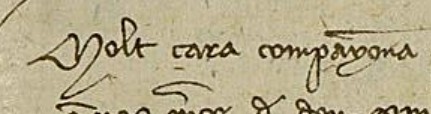
Violant informs the aljamas of Teruel that they will need to pay an extra tax.
Episode 151
](/historians-notebook-s1-episodes/images/may-24-aca-cr-r2053-f11r-violant-img024.jpg)
ACA CR R2053 f11r Source: PARES
Today’s Document
- Subject: financing the state in an interfaith context
- Date: May 24, 1387
- Day of the Week: Friday
- Language: Aragonese/Castilian
- Archival Reference Number: ACA CR R2053 f11r
- Link to PARES
- Place: Barcelona
- Sender: Violant
- Recipients: officials of the Jewish and Muslim aljamas of Teruel
Historical Thinking Notes
-
Sourcing: Violant had a direct governing authority over the aljamas and perhaps this made her more confident that tax increases would be met with compliance; both the Muslim and Jewish officials received the same document, indicating the high level of parity in the treatment at least on the topic of taxes
-
Contextualization: medieval Iberian queen lieutenants had, for over a century, held their own portfolios of aljamas and had separate treasury officials; at this time, Teruel had for centuries been firmly within the Crown of Aragon as a border city with Valencia and Castile; a recent article article by Asunción Blasco Martínez on the Najarí family provides excellent context on the aljama of Teruel1
-
Corroboration: the document examined in Episode 29 also informas localities of additional taxation and it is worth comparing that one, as well as the more elaborate May 20th to today’s document in order to get a better idea of when Violant had to make an extra effort to justify new levies, how religious contexts affected her choices, and what language she used to do that; many other documents about the introduction of new taxes can be found by browsing the episodes tagged with finances; most of the documents tagged with Jewish History and Muslim History also demonstrate the direct governing authority that the monarchs had over the aljamas throughout the Crown of Aragon
-
Close-Reading: rather than relying on an invocation of their duty as subjects, Violant uses the phrase ‘nos ayud’ meaning aid us or help us, and possibly this is nothing more than a typical expression for this kind of tax levy
What is this document doing?
- This document invokes general loyalty as its justification for the additional burden it is placing on the recipients.
- The document presumes a special relationship between the queen and the community of the aljama.
Questions
- Why was Teruel chosen for additional taxation at this time and why is this document entered in this register?
- How great of a financial emergency had necessitated these tax levies?
- How would the treasury official named in this document, Johann Ximenez ,have been treated by the leaders of the aljamas?
- How did the different sections of the royal bureaucracy come together to produce this document, as represented in the probata?
AI Usage
The transcription and translation of this document was carried out by my OpenClaw pipeline.
Bibliography
- Martínez, Asunción Blasco. “Los Najarí, judíos de Teruel: del esplendor al ocaso (siglos XIII-XV).” Miscelánea de Estudios Árabes y Hebraicos. Sección Hebreo 74 (November 2025): 73–125.
- Boswell, John. The Royal Treasure: Muslim Communities under the Crown of Aragon in the Fourteenth Century. Yale University Press, 1977.
- Kagay, Donald J. “Poetry in the Dock: The Court Culture of Joan I on Trial (1396-1398).” In Donald J. Kagay, War, Government, and Society in the Medieval Crown of Aragon, XI, 48-99. Variorum Collected Studies Series, CS 861. Ashgate/Variorum, 2007.
-
Asunción Blasco Martínez, “Los Najarí, judíos de Teruel: del esplendor al ocaso (siglos XIII-XV),” Miscelánea de Estudios Árabes y Hebraicos. Sección Hebreo 74 (November 2025): 73–125. ↩