Season 1, Episode 29
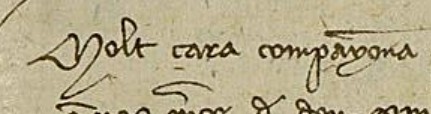
Violant informs communities in her portfolio that they will need to pay some additional taxes.
Episode 29
](/historians-notebook-s1-episodes/images/jan-22-aca-cr-r1819-f75v-violant.JPG)
ACA CR R1819 f75v Source: PARES
](/historians-notebook-s1-episodes/images/jan-22-aca-cr-r1819-f76r-violant.JPG)
ACA CR R1819 f76r Source: PARES
Today’s Document
- Subject: Tax collection
- Date: January 22, 1387
- Day of the Week: Tuesday
- Language: Catalan
- Archival Reference Number: ACA CR R1819 f75v-76r
- Link to PARES
- Place: Barcelona
- Sender: Violant
- Recipients: officials of several towns and aljamas
Historical Thinking Notes
-
Sourcing: Violant, as a new monarch, uses this letter to assert control over the localities in her portfolio, but also she establishes Jacme and Antonio Rosar as authorities over the taxation of these populations; her primary purpose, though, appears to be re-filling the treasury accounts that she will use for her own spending
-
Contextualization: this letter fits into a long-established pattern of the Crown of Aragon as a corporate monarchy; particular localities, especially religious minority neighborhoods, composed the queen’s portfolio; this financial relationship often led the monarchs to take the side of Jews and Muslims when they came into conflict with Christians
-
Corroboration: many documents cited by Benjamin Gampel corroborate the connection between Violant and the Jewish aljama of Valencia seen in this document1; see also Episode 161
- Close-Reading: the crossed out word ‘dispenser’ and the interlinear ‘tresoreria’ indicate the shifting of offices and turnover that went with the arrival of the new monarchs
What is this document doing?
- This document initiates the flow of revenue from several communities to Violant’s treasury
- The document presumes the authority of a new queen to collect money from localities in the former queen’s portfolio.
Questions
- How did the communities receiving this letter react to it? Did all of them pay?
- What kind of expedited process did these letters get sent through?
- Was this demand for funds a normal occurrence or did it break with an established pattern?
- Was the amount high? Low?
- Who were the officials mentioned? Were they replacing officials that had the job during Sibilla’s reign?
Bibliography
- Gampel, Benjamin R. Anti-Jewish Riots in the Crown of Aragon and the Royal Response, 1391-1392. Cambridge University Press, 2016.
- Nirenberg, David. Communities of Violence: Persecution of Minorities in the Middle Ages. Princeton University Press, 1996.
-
Benjamin R. Gampel, Anti-Jewish Riots in the Crown of Aragon and the Royal Response, 1391-1392 (Cambridge University Press, 2016), chapter on Violant ↩