Season 1, Episode 96
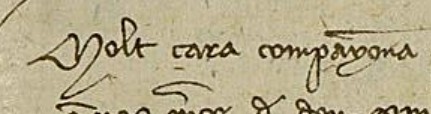
Violant demands that the Bishop of Girona and the Jurats of Girona act to quell the deadly violence being perpetrated by Christians agains Jews in that city.
Episode 96
](/historians-notebook-s1-episodes/images/mar-30-aca-cr-r1822-f144r-violant.jpg)
ACA CR R1822 f144r Source: PARES
](/historians-notebook-s1-episodes/images/mar-30-aca-cr-r1822-f144v-violant.jpg)
ACA CR R1822 f144v Source: PARES
Today’s Document
- Subject: persistent and severe violence of Christians against Jews
- Date: March 30, 1387
- Day of the Week: Saturday
- Language: Catalan
- Archival Reference Number: ACA CR R1822 f144r-v
- Link to PARES
- Place: Barcelona
- Sender: Violant
- Recipients: Bishop and Jurats of Girona
Historical Thinking Notes
- Sourcing: as Easter approached, increasing religious fervor provided an opening for malefactors to perpetrate violence against Jews1; Violant’s motivation to pressure the leaders of Girona to end the violence came largely from how she benefited financially from the direct governance of the aliamas but also interacted with Jewish officials who had high positions in her court and treasury; the recipients perhaps felt it possible to pay lip service to the monarchs in instances like these, since we see the steady drumbeat of violence like this before the explosion of the Anti-Jewish Riots of 1391
- Contextualization: the Jewish community of Girona had struggled since the devastation of the Bubonic Plague in 1348 and persistent in-fighting about leadership persisted through the 1380s2; Gampel also explains how social class tension among Christians, particularly peasant hatred of rentiers, in Girona fueled the violence against Jews3
-
Corroboration: thus far in the podcast we have examined six documents tagged as Jewish History, which taken together demonstrate the variability that characterized the interfaith context of the late fourteenth-century Crown of Aragon
-
Close-Reading: in these two letters, Violant uses a variety of phrases to describe the violence, such as ‘mal feytos’ and ‘dampnatges mortalment,’ and this gives us a good baseline to compare to later documents about violent attacks or bad deeds
What is this document doing?
- This document invokes royal authority in an attempt to protect a religious minority community.
- The document places both the ecclesiastical and secular leadership of Girona in the same category of subordination to the queen’s authority.
Questions
- How many Christians had attacked Jews in Girona in March of 1387?
- Violant had lived in Girona for many years and how did this influence the way that she responded to reports of this violence?
- Did the Bishop and Jurats of Girona feel that they could ignore Violant?
- How did socio-economic conditions impact the religious tension in Girona?
- Did the people of Girona, both Christians and Jews, see this episode of violence as a significant escalation?
AI Usage
I did not use AI for this episode since OpenClaw was running a job with Gemini and Claude in the background as I prepared for this episode.
Bibliography
- Baer, Yitzhak. A History of the Jews in Christian Spain. Jewish Publication Society of America, 1961.
- Catlos, Brian A. “Contexto y conveniencia en la Corona de Aragón: Propuesta de un modelo de interacción entre grupos etno-religiosos minoritarios y mayoritarios.” Revista d’història medieval 12 (for 2001-2002 2002): 259–68.
- Gampel, Benjamin R. Anti-Jewish Riots in the Crown of Aragon and the Royal Response, 1391-1392. Cambridge University Press, 2016.
- Nirenberg, David. Communities of Violence: Persecution of Minorities in the Middle Ages. Princeton University Press, 1996.
-
Benjamin R. Gampel, Anti-Jewish Riots in the Crown of Aragon and the Royal Response, 1391-1392 (Cambridge University Press, 2016), 114-115. ↩
-
Yitzhak Baer, A History of the Jews in Christian Spain (Jewish Publication Society of America, 1961), Vol. 2, 44-46. ↩
-
Benjamin R. Gampel, Anti-Jewish Riots in the Crown of Aragon and the Royal Response, 1391-1392 (Cambridge University Press, 2016), fn27 on 127-128. ↩