Season 1, Episode 13
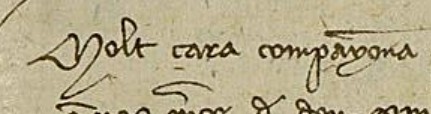
Violant informs Joan of communication to the Count of Empúries about the succession. She also directs Joan to hold off on any decisions until they are together in Barcelona with Martí. 1
Episode 13
](/historians-notebook-s1-episodes/images/jan-6-aca-cr-r1819-f71v-violant.JPG)
ACA CR R1819 f71v Source: PARES
Today’s Document
- Subject: Violant coordinating succession plans in Barcelona
- Date: January 6, 1387
- Day of the Week: Sunday
- Language: Catalan
- Archival Reference Number: ACA CR R1819 f71v
- Link to PARES
- Place: Barcelona
- Sender: Violant
- Recipient: Joan
Historical Thinking Notes
- Sourcing: this letter is among the very first that Violant sends as Queen; the mid-twentieth century historian Rafael Tasis i Marca lists an inscription in one of the ACA registers that officially records King Pere’s death on January 5, 1387 2; Violant is in the midst of constructing her identity as queen and establishing this identity in the record of official letters; she would want to bolster Joan’s authority as king, securing their positions in the moment of succession
](/historians-notebook-s1-episodes/images/empuries.png)
County of Empúries within Catalonia Source: Mutxamel - CC BY-SA 3.0, Wikimedia Commons
-
Contextualization: transitions of power often become opportunities for political opponents and malefactors to make moves to better their own positions; Joan seems to have empathized with the recent rebellion by the Count of Empúries against Pere’s rule, but now a disloyal vassal would be a challenge to his authority in the early days of his kingship; Violant’s intervention in the succession fits into a pattern of politically active queens in the history of the Crown of Aragon, even moreso when compared to Joan’s mother, Elionor of Sicily and her successor, Queen Sibilla.
-
Corroboration: the previous page, the recto side of this folio, has letters from December 22, December 24, and January 3rd, all with location listed as Girona and the sender as ‘la Duquessa’;
-
Close-Reading: following Claire Ponsich’s close reading of this document, Violant’s tone is commanding and reveals that, at least on occasion, she orchestrates Joan’s political manueverings; perhaps to soften that tone, she signs the letter as ‘your humble companion, entrusted in your grace, the Queen’
What is this document doing?
- This document supports Violant’s immediate project of establishing her authority as queen.
- The document attempts to uplift Joan as king, despite his absence
Questions
- Does Violant know about the increasing severity of Joan’s illness? If so, who is informing her?
- How did the major power players in Barcelona react to Violant’s interventions?
- What role is Gasto de Montcada playing in the transition of power? Is he especially well-connected to the Count of Empúries?
- Where was Violant living and how is her household staff merging or replacing the staff in the palace? Or is Violant living in another residence?
- Does Violant feel confident and supported? Or does she feel vulnerable?
Additional Notes
Sometimes the information that we historians want to know is exactly the information that the historical subjects felt most uncomfortable writing about, even when it comes to what we consider the most essential facts of a historical event, such as the dates of the king’s death and the heir’s illness.
Bibliography
- Ponsich, Claire. ‘De la parole d’apaisement au reproche: un glissement rhétorique du conseil ou l’engagement politique d’une reine d’Aragon?,’ Cahiers d’études Hispaniques Medievales 31 (2008): 81–117.
- Tasis i Marca, Rafael. Joan I: el rei caçador i músic. Barcelona: Editorial Aedos, 1959.
-
partially transcribed by Claire Ponsich, ‘De la parole d’apaisement au reproche: un glissement rhétorique du conseil ou l’engagement politique d’une reine d’Aragon?,’ Cahiers d’études Hispaniques Medievales 31 (2008): 81–117, at 97. ↩
-
Rafael Tasis i Marca, Joan I: el rei caçador i músic (Barcelona: Editorial Aedos, 1959), 138. ↩